
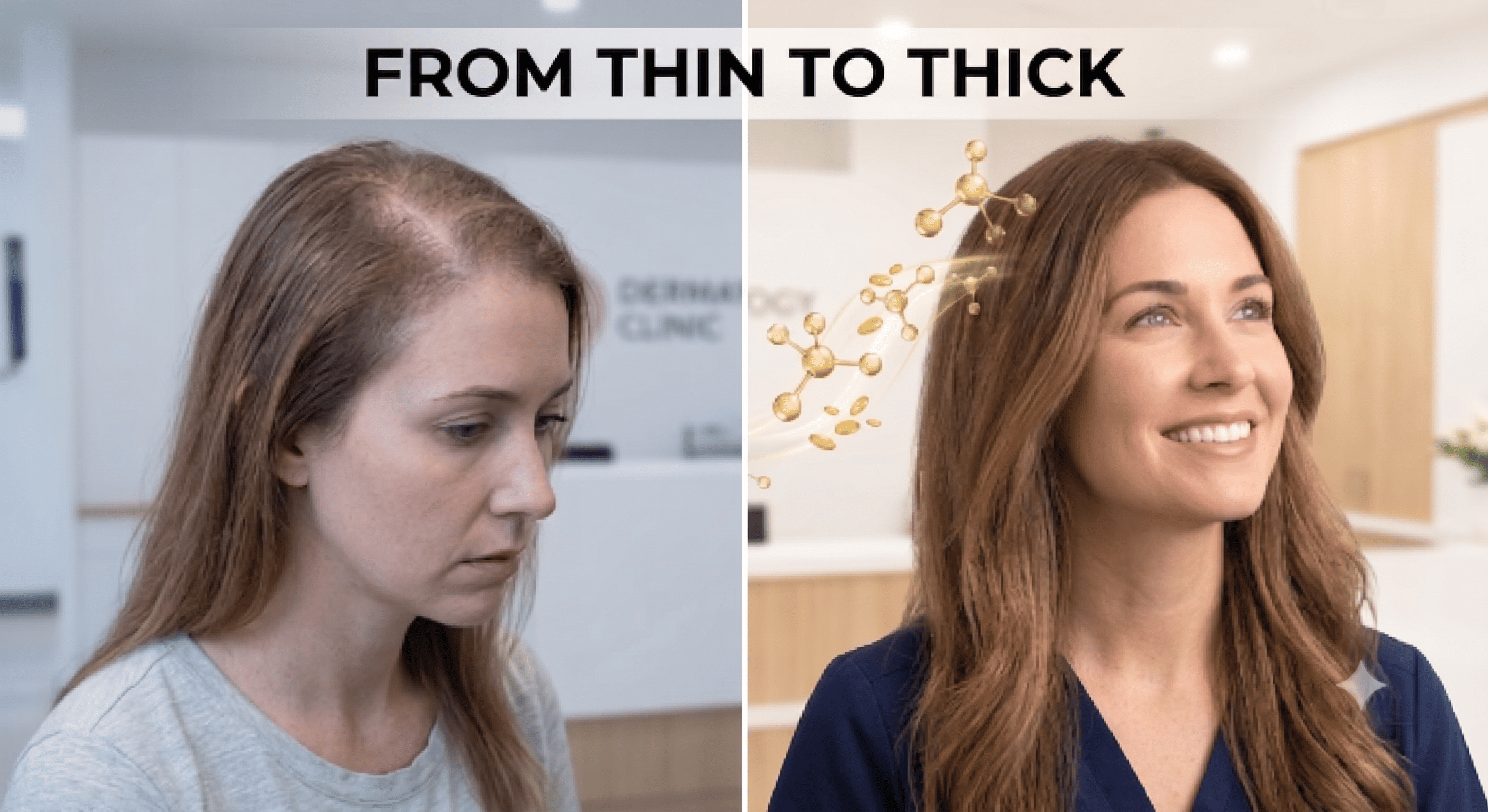
Hair loss is a widespread concern that requires timely, targeted action to stop or reduce its progression. The primary cause of hair loss in both men and women is Androgenetic Alopecia (AGA), a form of progressive hair loss that presents in a distinct distribution pattern. Beyond the physical symptoms, AGA frequently impacts an individual's self-esteem, confidence, and overall quality of life.
The Biological Mechanism of AGA
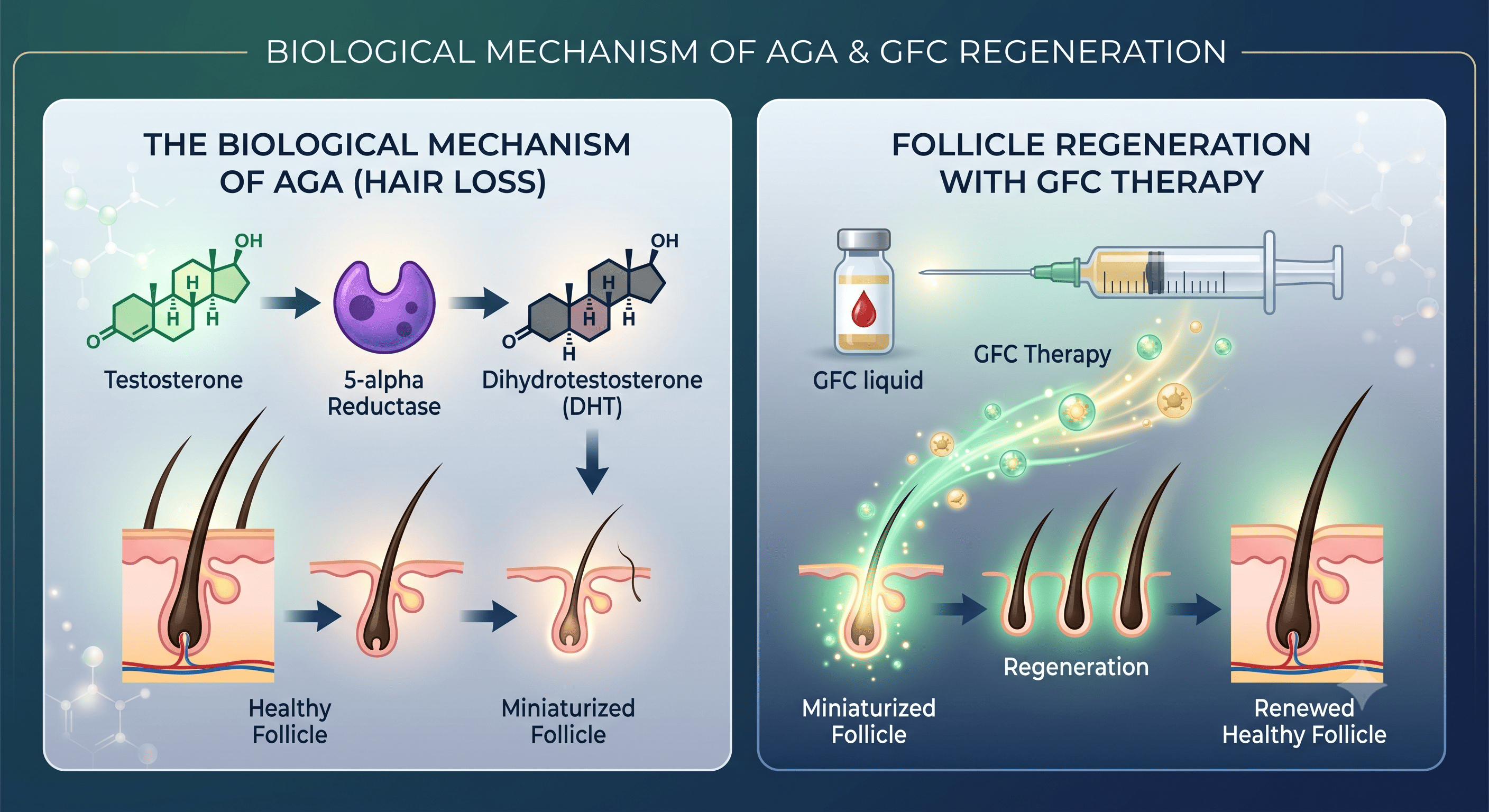
Androgenetic Alopecia is driven by a combination of genetic and hormonal factors. The condition is characterized by an elevated concentration of an enzyme called 5-alpha reductase surrounding the hair follicles.
This enzyme converts normal testosterone into dihydrotestosterone (DHT). DHT alters stable hair follicles, making them unstable and progressively weaker, which ultimately leads to hair fall.
Fortunately, hair loss can be managed and reversed without specialized surgical intervention. By utilizing the patient's own blood platelets, advanced therapeutic strategies like Growth Factor Concentrate (GFC) therapy can successfully replenish and regenerate hair follicles. This innovative approach delivers remarkable outcomes for both hair restoration and facial rejuvenation.
How Do PRP and GFC Work?
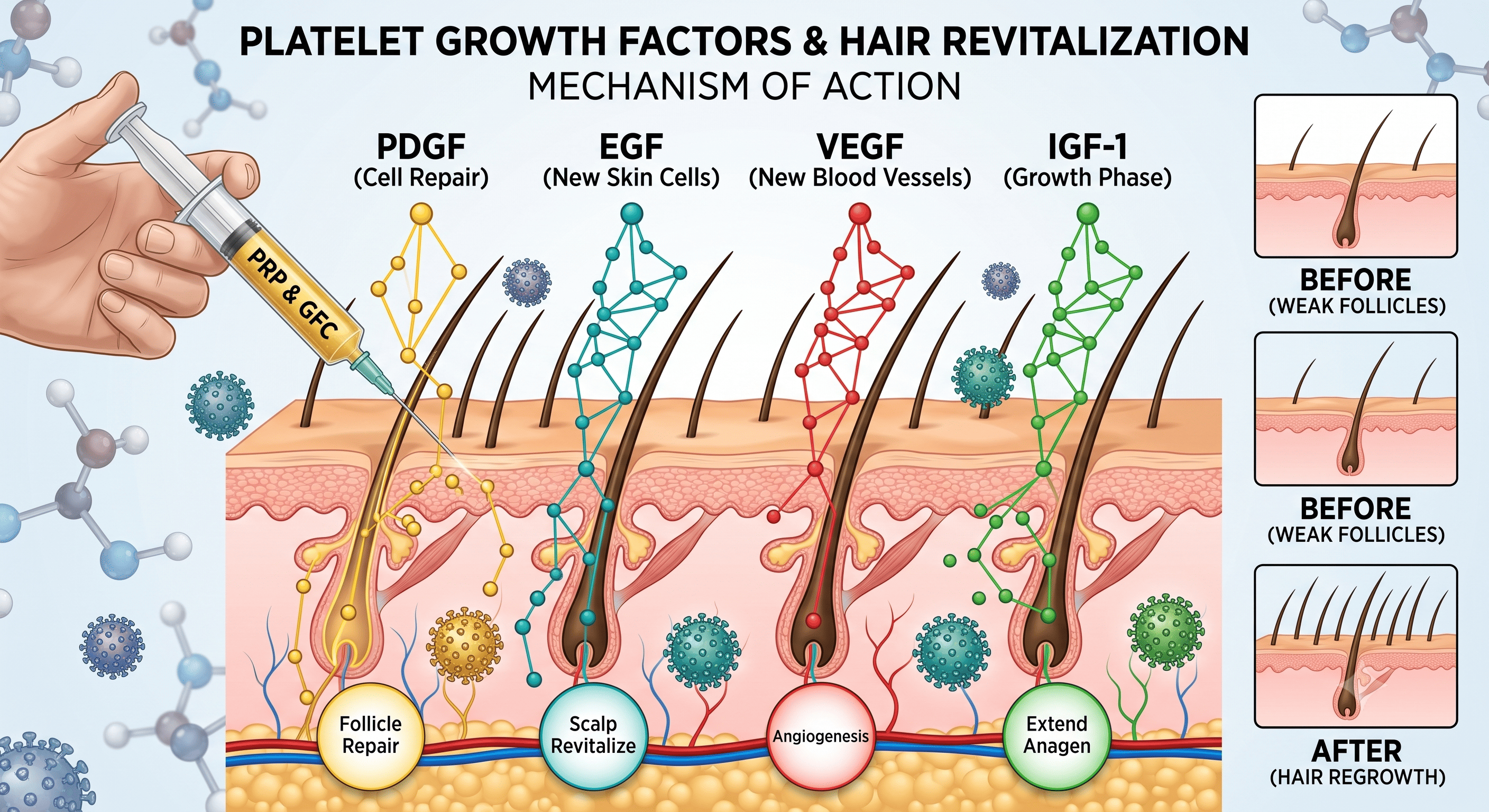
Platelets are specialized blood cells that naturally contain a rich concentration of vital growth factors. These growth factors act directly on the scalp to revitalize weak follicles:
1. Platelet-Derived Growth Factor (PDGF): Enhances cellular growth and repairs damaged hair follicles.
2. Epidermal Growth Factor (EGF): Stimulates the scalp’s natural capacity to generate healthy skin cells, boosting overall follicular health.
3. Vascular Endothelial Growth Factor (VEGF): Promotes the formation of new blood vessels (neovascularization), ensuring that follicles receive an adequate supply of essential nutrients.
4. Insulin-like Growth Factor-1 (IGF-1): Prolongs the anagen (growth) phase of the hair cycle, supporting the development of longer, thicker hair strands.
Both Platelet-Rich Plasma (PRP) and Growth Factor Concentrate (GFC) are non-surgical, minimally invasive treatments that harness these platelets to stimulate hair regrowth and improve hair density.
Platelet-Rich Plasma (PRP) for Hair Loss
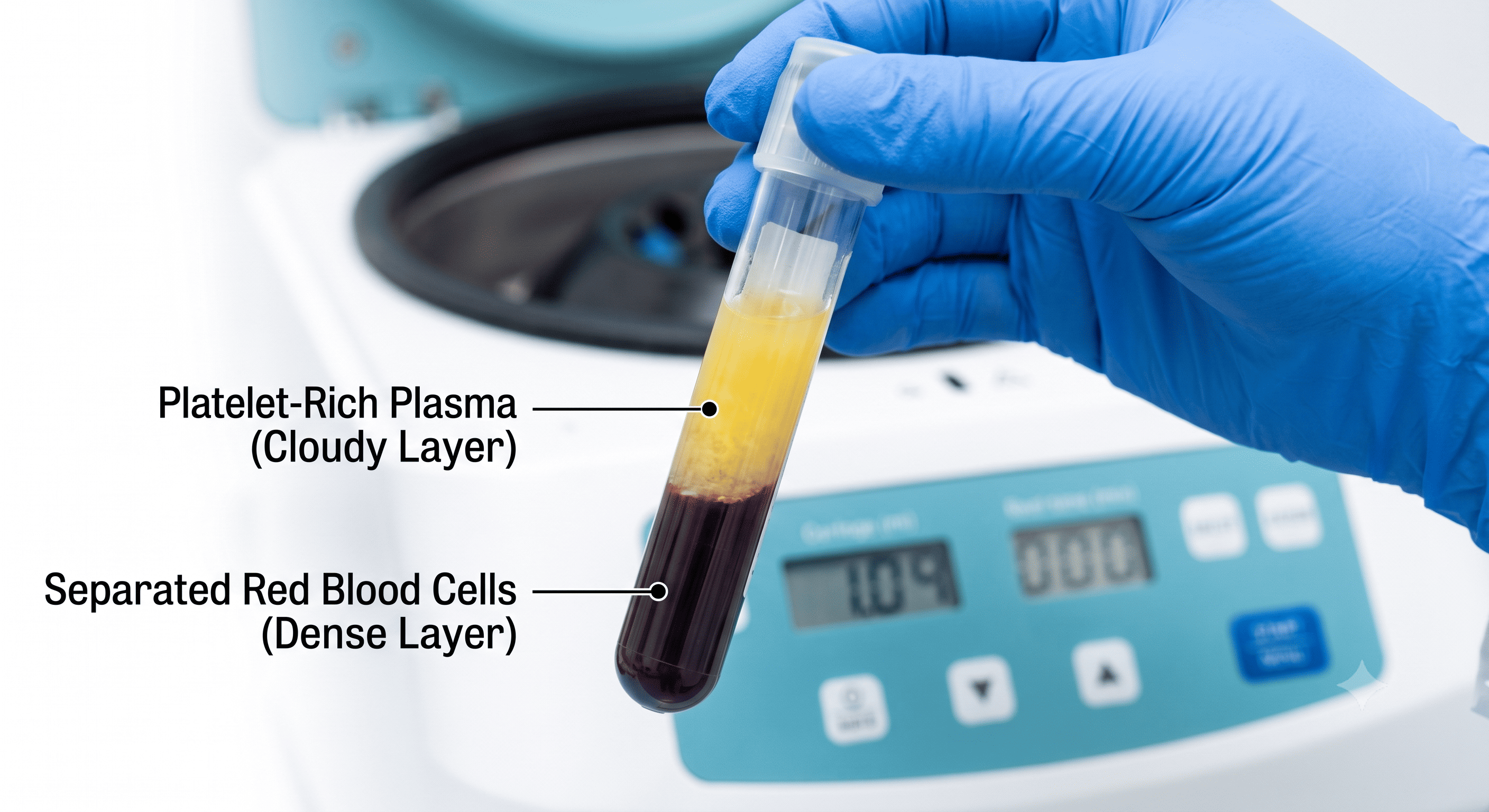
PRP therapy involves isolating and concentrating blood platelets into a small, highly effective volume of plasma.
The Clinical Preparation Procedure
1. Consent and Sanitation: After obtaining proper patient consent, venous blood is withdrawn under strict aseptic precautions.
2. Anticoagulant Mixing: The blood is collected in a specialized tube containing an anticoagulant solution, such as citrate dextrose or sodium citrate.
3. Soft Spin Centrifugation: The tube undergoes an initial "soft spin" in a centrifuge to separate the platelet-rich plasma from the dense whole blood cells.
4. Heavy Spin Centrifugation: A second "heavy spin" is performed to concentrate the platelets further by removing the supernatant (top layer of platelet-poor) plasma.
Growth Factor Concentrate (GFC) for Hair Loss
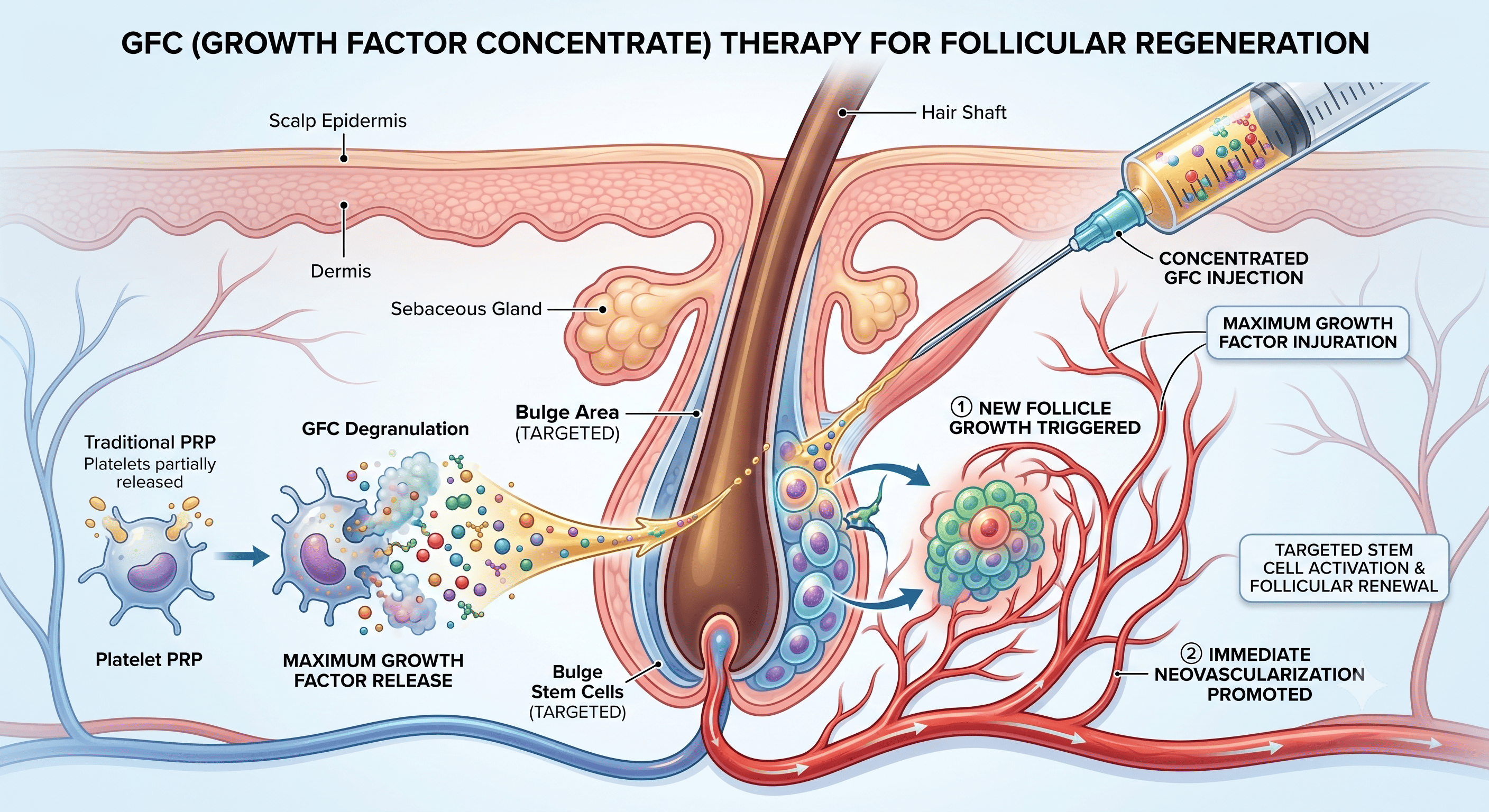
GFC treatment represents a modern advancement in trichology. It involves directly injecting a highly purified, concentrated mix of growth factors—extracted entirely from the patient's own blood—into the scalp to improve hair quality and stimulate regrowth.
The Science of GFC: This superior method of follicular regeneration modifies the traditional PRP technique. It completely degranulates the intracellular alpha-granules inside the platelets, forcing them to release a maximum concentration of growth factors. These active growth factors directly target the stem cells located in the bulge area of the hair follicles, triggering new follicle growth and promoting immediate neovascularization.
Types of Hair Loss Treated by GFC
1. Alopecia Areata: An autoimmune condition causing patchy hair loss. GFC’s regenerative properties help repair and restore these damaged follicles.
2. Telogen Effluvium: Characterized by excessive hair shedding due to sudden stress or hormonal shifts. GFC stabilizes the natural hair growth cycle to significantly reduce hair fall.
3. Traction Alopecia: Triggered by prolonged tension on the hair from tight styles. GFC rejuvenates and strengthens these weakened roots.
4. Androgenetic Alopecia: Commonly known as male or female pattern baldness. GFC counteracts follicular miniaturization, slowing the progression of baldness while revitalizing active follicles.
5. General Hair Thinning: Ideal for individuals experiencing diffuse hair thinning across the scalp, enhancing overall hair density and texturing.
Patient Selection: Who is a Candidate?
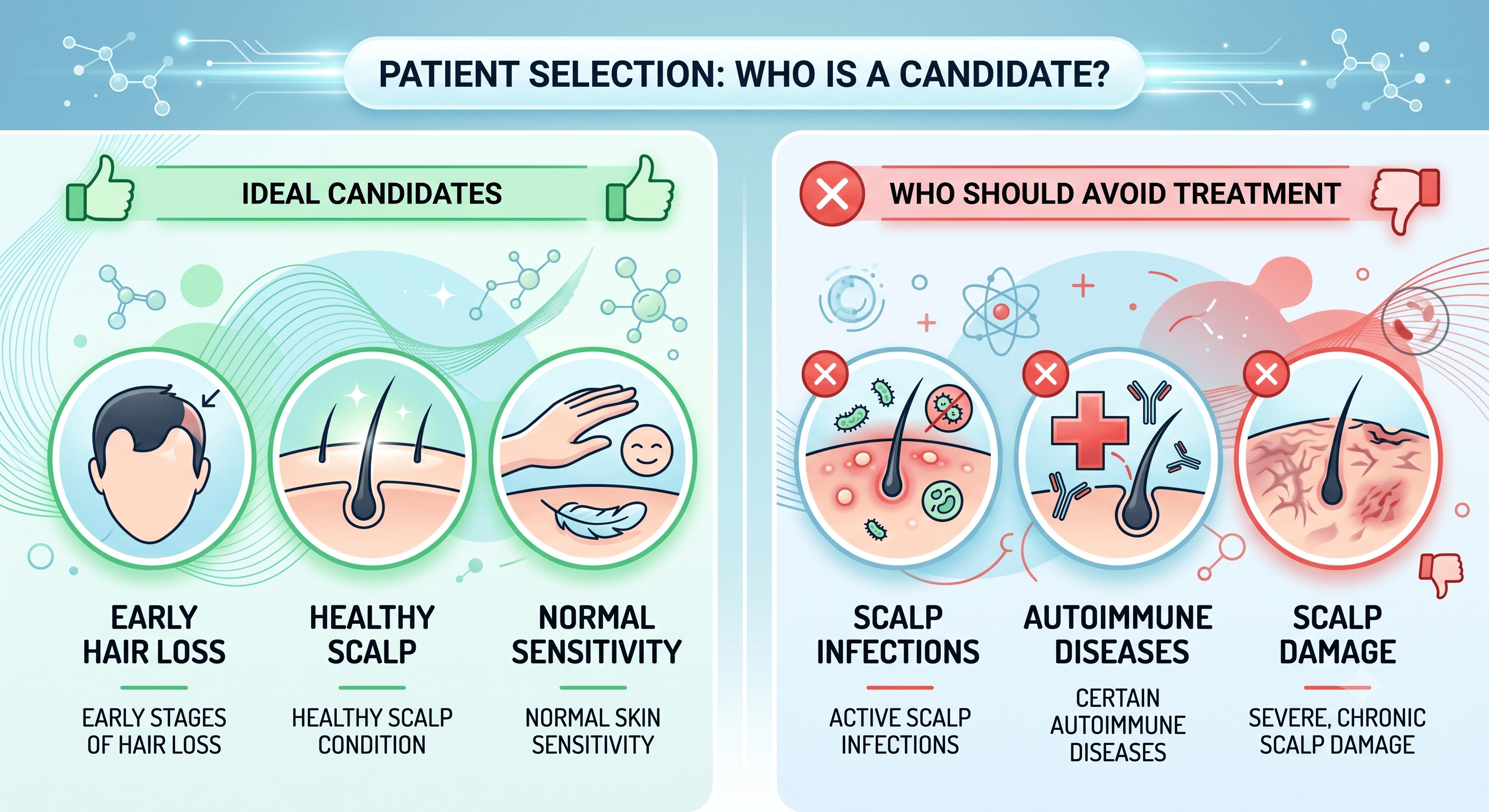
1. Suitable Candidates: Ideal results are seen in individuals who are in the early stages of hair loss, possess a healthy scalp condition, and demonstrate normal skin sensitivity.
2. Who Should Avoid Treatment: GFC and PRP treatments are not recommended for individuals suffering from active scalp infections, certain autoimmune diseases, or severe, chronic scalp damage.
What to Expect: Treatment Protocol and Results
1. The Clinical Session: The process begins with a standard blood draw. The sample is immediately centrifuged to extract and isolate the growth factors. The resulting concentrate is then meticulously injected into the pre-mapped thinning zones of the scalp, stimulating the hair follicles directly.
2. Post-Treatment Aftercare: To secure optimal results, patients must strictly avoid harsh chemical hair treatments, excessive sun exposure, and vigorous scalp massages immediately following the procedure. Do not apply any synthetic soaps, shampoos, or chemical-heavy conditioners directly to the treated area during the initial recovery phase.
3. Timeline and Session Count: The Schedule: A standard GFC protocol requires 3 to 4 initial sessions, performed at strict 1-month intervals. Maintenance: To maintain full regenerative effects, a booster session is recommended every 2 to 3 months. The exact number of sessions required varies depending on the patient's age, baseline health status, and the extent of their hair loss. Expected Results: Visible improvements in hair density, thickness, and overall volume are typically observed within 3 to 6 months of continuous treatment.
4. Maximizing Efficacy with Microneedling: Combining GFC therapy with microneedling (derma rolling) is highly efficient for patients fighting Androgenetic Alopecia. The micro-injuries created by the needles significantly enhance the transportation, penetration, and absorption of the growth factors into the deeper layers of the scalp, allowing the active ingredients to easily reach the roots.
Conclusion:
Extensive clinical observations demonstrate that both PRP and GFC therapy deliver highly promising results for Androgenetic Alopecia. By effectively mitigating hair loss, increasing strand thickness, and enhancing overall hair volume, these non-surgical therapies offer a safe path to hair restoration.
It is crucial for individuals to consult with a qualified healthcare professional or dermatologist to establish a safe, personalized treatment protocol tailored to their specific hair condition.