
How to Choose the Best Sunscreen for Your Skin: SPF, UVA/UVB & How to Apply It
Sunscreen is one of the most important parts of a daily skincare routine. Regular sun protection can help protect your skin from the harmful effects of ultraviolet (UV) radiation, including sunburn, tanning, pigmentation and premature skin ageing. But with so many sunscreens available today, choosing the right one can be confusing. What does SPF actually mean? Is SPF 30 enough? What is the difference between UVA and UVB? Should you choose a mineral or chemical sunscreen? And which sunscreen is suitable for oily, dry or sensitive skin? In this guide, Dr. Minu Mary Ommen explains the important factors to consider when choosing and using sunscreen correctly.
Why Is Sunscreen Important?
Sunscreen is a photoprotective topical product that helps protect the skin from the short-term and long-term effects of ultraviolet radiation. UV exposure can affect the skin in several ways. It can contribute to sunburn, tanning, pigmentation and visible signs of premature ageing. Long-term UV exposure is also associated with skin damage and an increased risk of skin cancer. This is why sunscreen should not be considered only a beach-day product. For many people, daily sun protection is an important part of maintaining healthy skin.
What Is the Difference Between UVA and UVB?
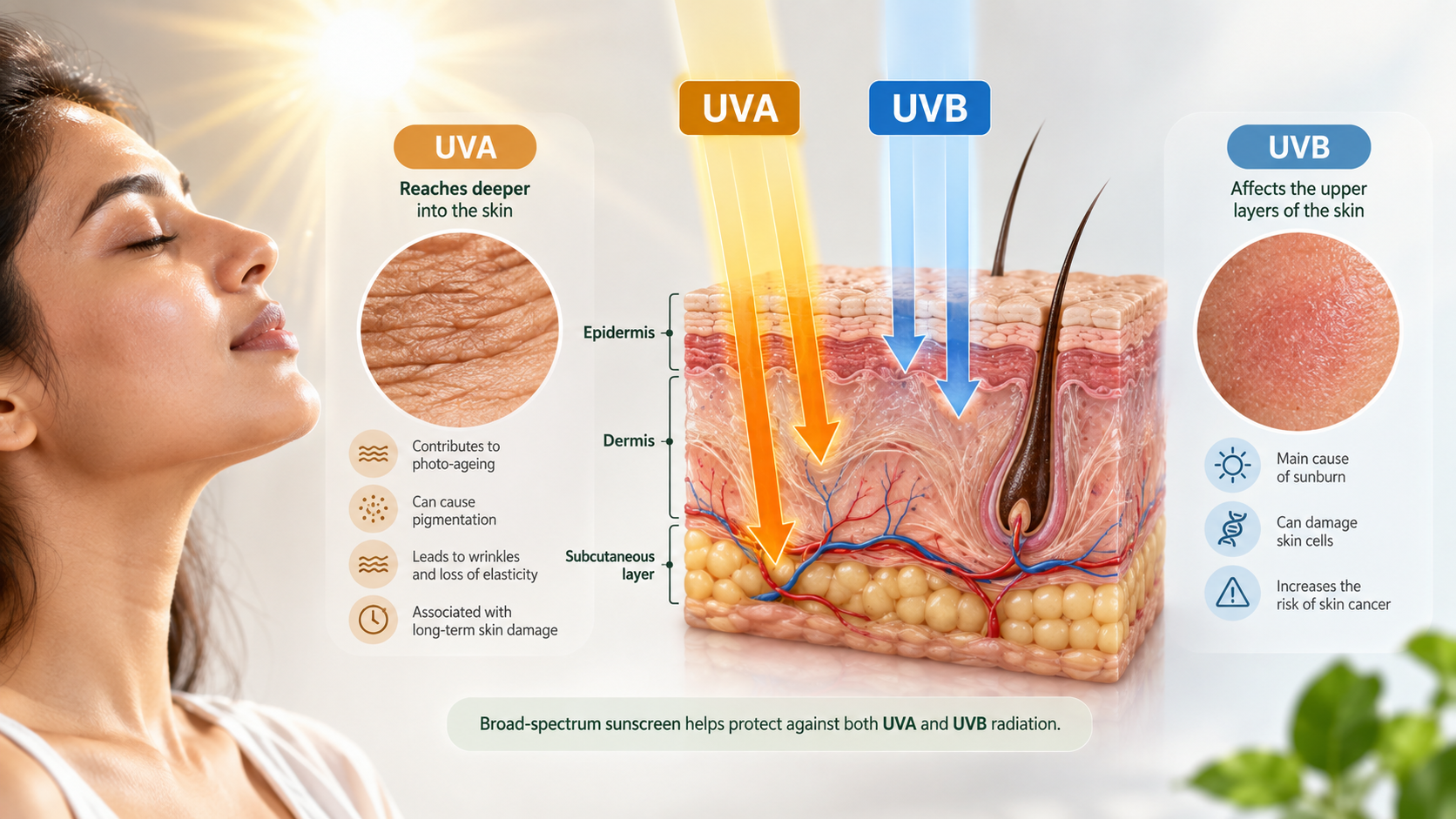
Sunlight contains different types of ultraviolet radiation. UVA and UVB are particularly important when discussing sunscreen. UVA penetrates deeper into the skin and is associated with tanning and photoageing. Long-term exposure can contribute to changes such as wrinkles, pigmentation and loss of skin elasticity. UVB primarily affects the more superficial layers of the skin and is a major cause of sunburn. UVB exposure also contributes to skin damage and skin cancer. Because both UVA and UVB can affect your skin, choosing a broad-spectrum sunscreen is important. Broad-spectrum sunscreen provides protection against both UVA and UVB radiation.
What Does SPF Mean?
SPF stands for Sun Protection Factor. It primarily indicates the level of protection a sunscreen provides against UVB radiation, which is responsible for sunburn. For example: 1. SPF 30 allows approximately 1/30 of sunburn-producing UVB radiation to reach the skin when applied correctly. 2. SPF 50 provides slightly higher UVB protection than SPF 30. 3. Increasing SPF beyond 50 provides progressively smaller increases in protection. However, the SPF number is not the only thing you should consider. A good sunscreen should also provide broad-spectrum protection, and it needs to be applied adequately and reapplied when necessary.
What Should You Look for When Choosing a Sunscreen?
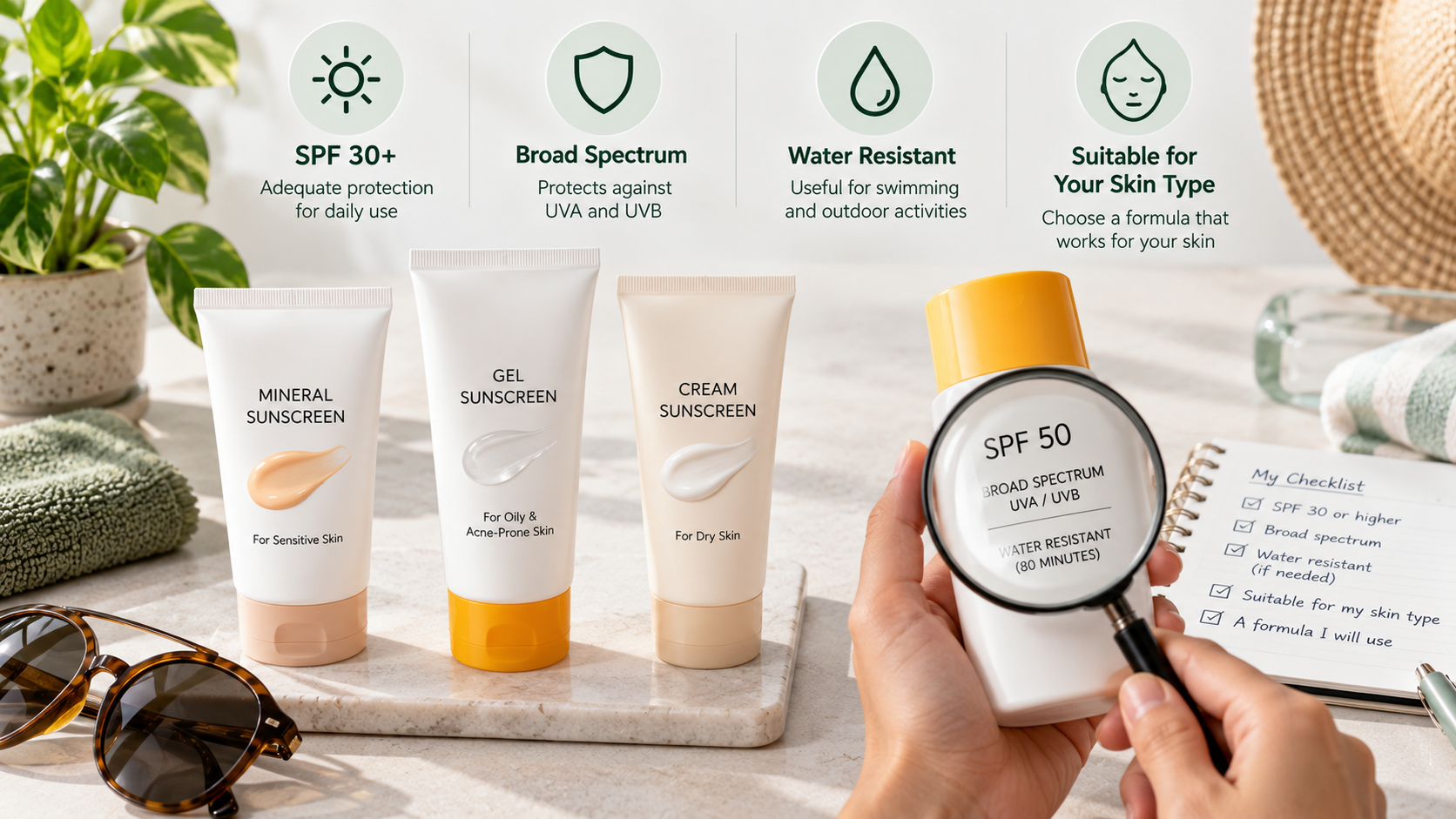
When choosing a sunscreen, look beyond just the SPF number. Ideally, look for: SPF 30 or higher For everyday use, choose a sunscreen with SPF 30 or higher. Broad-spectrum protection This means the sunscreen protects against both UVA and UVB radiation. Water resistance If you are swimming, exercising or sweating, a water-resistant sunscreen can be useful. Remember that water-resistant does not mean waterproof, and sunscreen needs to be reapplied after swimming or excessive sweating. Suitable for your skin type The texture and formulation should suit your skin. A sunscreen that feels comfortable is more likely to be used consistently. Non-comedogenic formulation If you have oily or acne-prone skin, choosing a non-comedogenic sunscreen may help reduce the likelihood of pore clogging. Some formulations also contain ingredients such as hyaluronic acid, niacinamide or antioxidants that can complement your skincare routine.
Which Sunscreen Is Best for Your Skin Type?
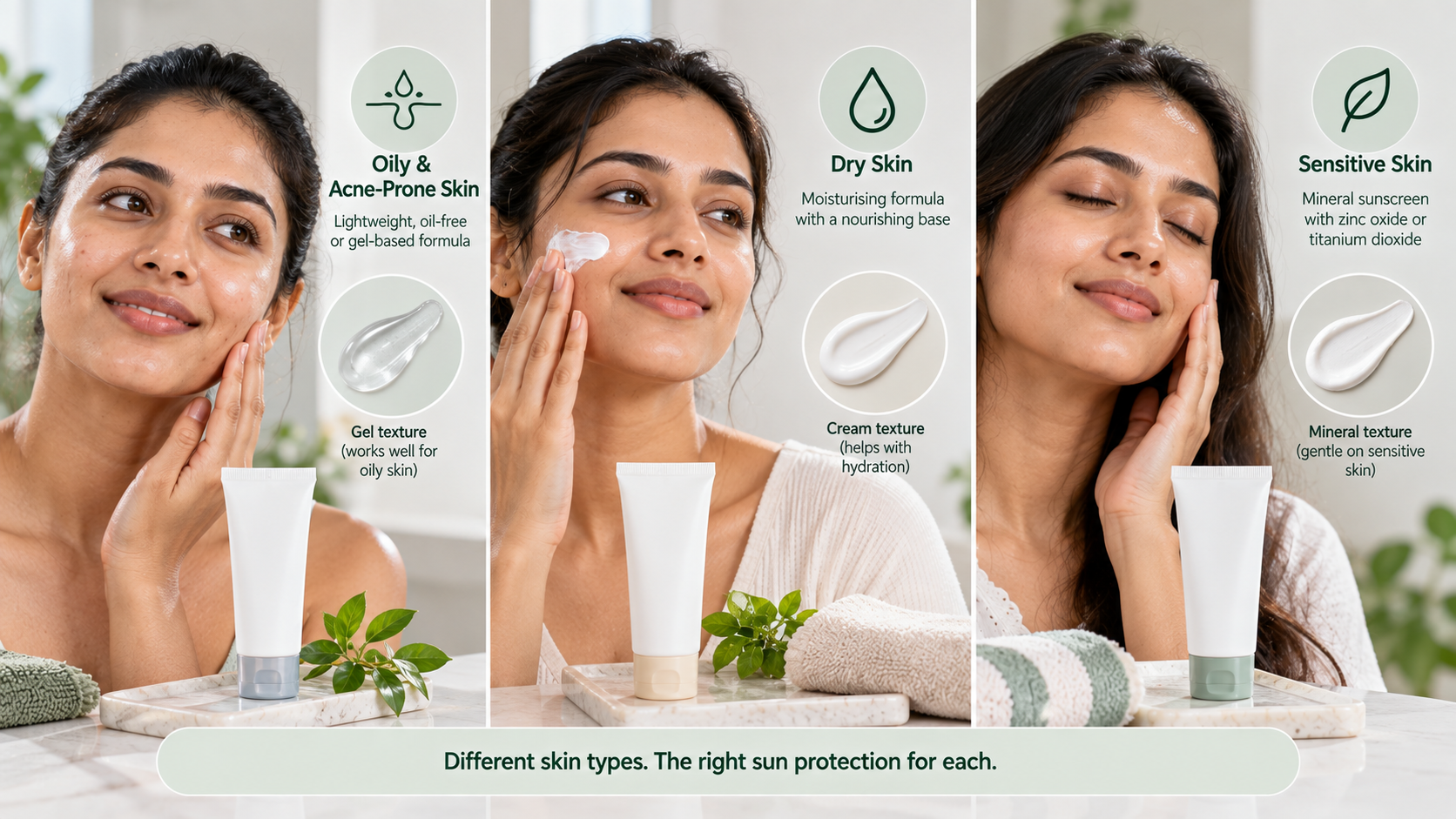
There is no single sunscreen that is perfect for everyone. Your skin type, lifestyle and personal preferences can all influence which formulation works best for you. - Sunscreen for Oily or Acne-Prone Skin If your skin tends to become oily or you are prone to acne, look for a lightweight sunscreen that feels comfortable without leaving a heavy or greasy finish. Gel-based, oil-free or non-comedogenic formulations may be more comfortable for oily and acne-prone skin. - Sunscreen for Dry Skin If you have dry skin, a sunscreen with a moisturising base can provide both sun protection and additional hydration. Cream-based formulations may feel more comfortable for dry skin, particularly when used after moisturiser. - Sunscreen for Sensitive Skin People with sensitive skin may prefer mineral sunscreens containing ingredients such as zinc oxide or titanium dioxide. A gentle, fragrance-free formulation may also be preferable if your skin is easily irritated. The most important factor is finding a sunscreen that your skin tolerates well and that you can use consistently.
How Should You Apply Sunscreen?
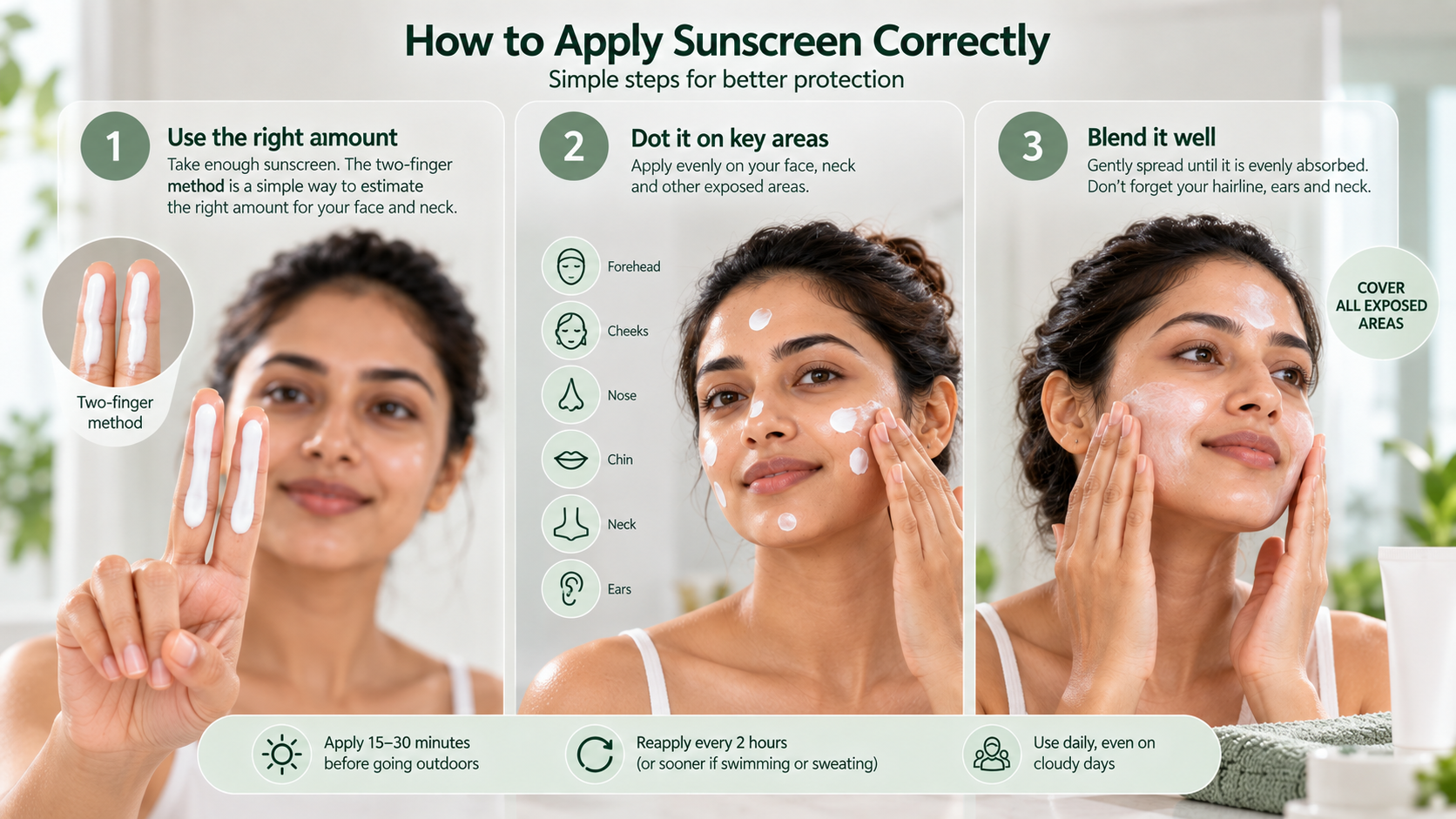
Using sunscreen correctly is just as important as choosing the right sunscreen. Follow these simple steps: 1. Apply sunscreen as the last step of your morning skincare routine. Apply it after cleansing and moisturising, before makeup if you wear it. 2. Use enough sunscreen. Using too little sunscreen can significantly reduce the protection you actually receive. For the face and neck, the two-finger method is a simple way to estimate an appropriate amount. 3. Cover all exposed areas. Do not focus only on your cheeks and forehead. Remember areas such as: Face Neck Ears Hairline Nose Chin Also remember other exposed areas of the body, especially the hands, arms and legs. 4. Apply before going outdoors. Give the sunscreen time to form an even protective layer before significant sun exposure. 5. Reapply when needed. Sunscreen can wear off with time, sweating, swimming or towel drying, so reapplication is important.
How Often Should You Reapply Sunscreen?
For outdoor activities, sunscreen should generally be reapplied about every two hours. You may need to reapply sooner if you are: Swimming Sweating heavily Towel drying Spending extended periods outdoors Water-resistant sunscreen can remain effective for a limited period during water exposure, but it still needs to be reapplied according to the product's instructions. Remember: a higher SPF does not mean you can apply it once and forget about it for the entire day.
Do You Need Sunscreen on Cloudy Days?
Yes. UV radiation can still reach your skin on cloudy days. Your skin can therefore receive UV exposure even when the weather does not feel particularly sunny. For this reason, sunscreen is best treated as part of a consistent daily skincare routine rather than something used only during bright, sunny weather. Other protective measures can also help, including seeking shade, wearing protective clothing and using sunglasses.
Mineral vs Chemical Sunscreen: Which One Should You Choose?
Sunscreens can broadly be classified according to their active UV filters. Mineral Sunscreens Mineral sunscreens commonly use zinc oxide or titanium dioxide as active ingredients. They are often preferred by people with sensitive skin because these ingredients can be well tolerated. Chemical Sunscreens Chemical sunscreens use organic UV-filter molecules that absorb UV radiation. Different filters provide protection against different parts of the UV spectrum. Hybrid Sunscreens Hybrid sunscreens combine different types of UV filters. The important thing is not simply whether a sunscreen is labelled mineral, chemical or hybrid. What matters is that it provides appropriate broad-spectrum protection and is suitable for your skin and lifestyle.
Can Sunscreen Help Prevent Premature Skin Ageing?
Sun exposure is one of the major environmental factors contributing to visible skin ageing. Repeated UV exposure can contribute to changes such as: Fine lines Wrinkles Uneven pigmentation Loss of elasticity Sun spots Uneven skin tone Consistent sun protection can therefore be an important part of a long-term skin-care and anti-ageing routine. This is also why sunscreen features prominently in Dr. Minu Mary Ommen's MangoPeel article, “Sunscreens: The Skin Saviours.”
What Are the Most Common Sunscreen Mistakes?
Even when people use sunscreen regularly, certain habits can reduce its effectiveness. Using Too Little Applying a very small amount may not provide the protection indicated on the label. Forgetting the Neck and Ears These areas are often exposed to the sun but are easily missed during application. Applying Only on Sunny Days UV exposure is not limited to bright sunny days. Not Reapplying Sunscreen gradually wears off, particularly with sweating, swimming and towel drying. Choosing a Formula You Dislike If a sunscreen feels excessively greasy, heavy, irritating or uncomfortable, you may be less likely to use it consistently. The best sunscreen is one that provides appropriate protection and that you are comfortable using regularly.
When Should You See a Dermatologist?
If you have persistent pigmentation, unusual or changing skin spots, repeated sunburns, significant sun damage or concerns about which sunscreen is appropriate for your skin, a dermatologist can help assess your skin and recommend a suitable approach. People with conditions such as acne, rosacea, eczema or very sensitive skin may also benefit from personalised advice when choosing skincare and sunscreen products.
Conclusion
Choosing sunscreen does not have to be complicated. Start with SPF 30 or higher, look for broad-spectrum protection, choose a formulation that suits your skin type, apply enough product and remember to reapply when necessary. Whether you have oily, dry or sensitive skin, the most useful sunscreen is one that provides appropriate protection and fits comfortably into your daily routine. Consistent sun protection is not just about preventing sunburn. It is an important part of protecting your skin from long-term UV damage and maintaining healthy-looking skin over time. Protect your skin today for healthier skin tomorrow.