Best Foods for Healthy Skin: Nutrients, Antioxidants and Foods to Avoid
When you think about taking care of your skin, what comes to mind first? Your skincare routine? The products you use? Maybe protecting your skin from the sun?
What are you feeding your skin?
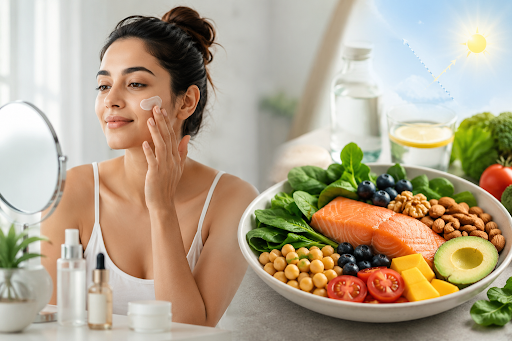
The skin needs different nutrients to support processes related to tissue synthesis, hydration, collagen, elasticity, firmness and protection against oxidative damage. So, while we often think of skincare as something that happens in front of the mirror, part of that support also comes from what we eat and drink every day. So before you look at your next skincare product, take a look at your plate.
Does your skin get enough of what it needs?
There isn't one single nutrient that keeps skin looking healthy. Different nutrients support different aspects of the skin. Protein, for example, is associated with tissue synthesis, skin repair and hormone production. Foods such as eggs, lentils, fish, tofu and paneer are listed as sources. Then there is something even simpler: water. Adequate hydration is important for keeping the skin smooth and supple. Plain water, tender coconut water and lemon juice are mentioned as sources. Some nutrients are particularly associated with the way skin looks and maintains its structure.
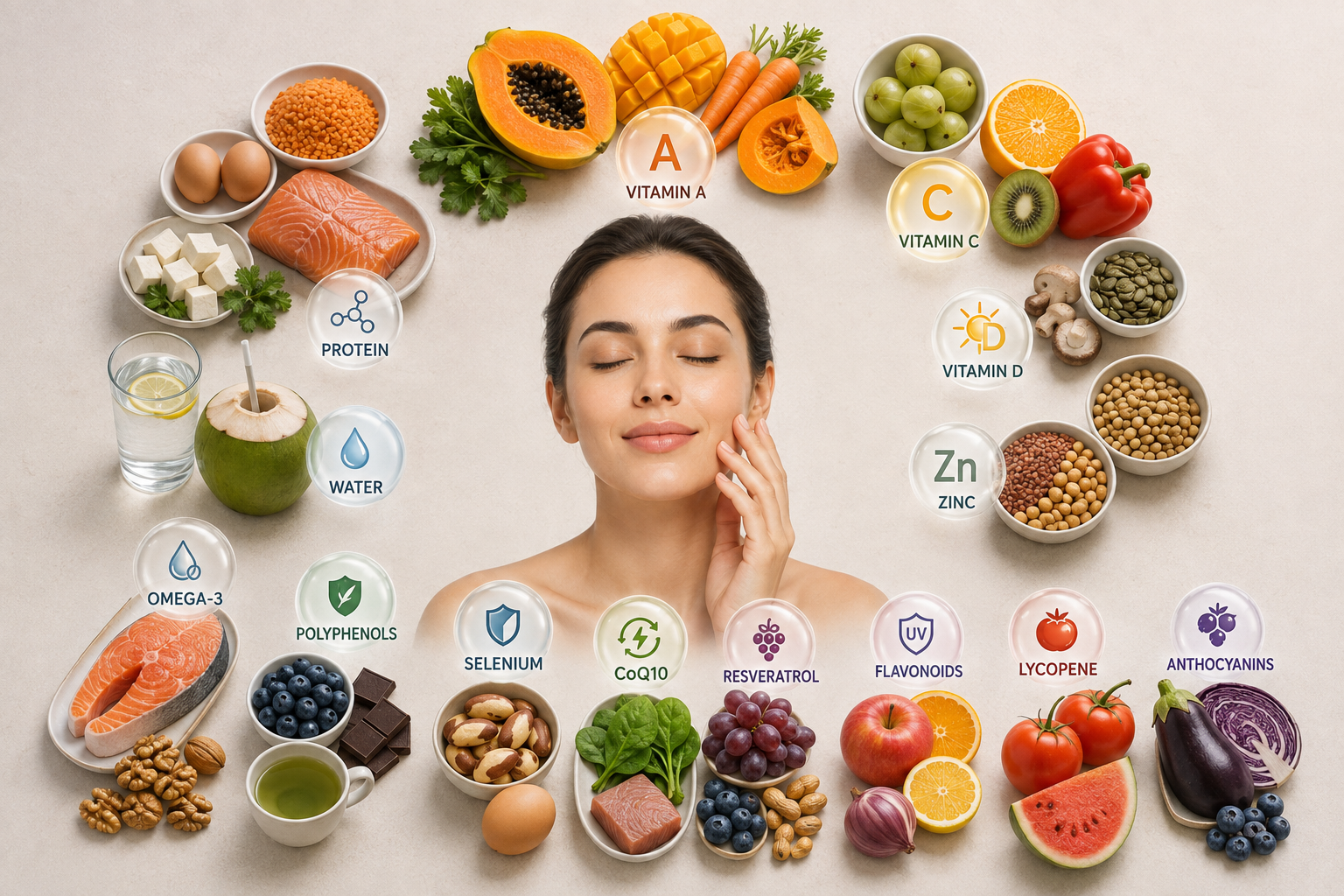
Vitamin A is described as a skin generator, promoting youthful-looking skin, reducing sun sensitivity and fighting dullness. Mangoes, papaya, pumpkin, carrots and leafy vegetables are listed as food sources. Vitamin C is described as a collagen booster. It helps with collagen synthesis and maintaining skin elasticity and firmness, while also being associated with brighter-looking skin. Amla, guava, citrus fruits, kiwi and capsicum are among the listed sources. Vitamin D is described as the soul of sunlight, with pumpkin seeds, legumes, wholegrains and seafood listed as sources. Zinc, described as the mechanic, is associated with improving immunity and helping the skin heal, with similar food sources including pumpkin seeds, legumes, wholegrains and seafood.
What about the nutrients called antioxidants?
The list also includes several nutrients described as antioxidants, each associated with different aspects of skin support. Omega-3 fatty acids are described as cell softeners and are associated with hydration. Sources include salmon, chia seeds, sardines, mackerel, walnuts and flax seeds. Polyphenols are described as DNA defenders. Berries, green tea and dark chocolate are listed as sources. Selenium, called “The Shield,” is another antioxidant, with Brazil nuts, eggs, whole grains and tuna mentioned as sources. Then there is CoQ10, described as “The Recharger” and associated with wrinkles. Salmon, mackerel, tuna, spinach and organ meats are listed as sources. Resveratrol is described as an antioxidant associated with longevity and anti-inflammatory properties. Grapes with seeds, berries and peanuts are among its sources. The list also includes flavonoids, associated with UV stress and preventing oxidative damage. Apples, onions and citrus fruits are mentioned as sources. And there are two more interesting names: lycopene, described as a saver associated with sun damage and oxidation, and anthocyanins, described as wrinkle warriors associated with inflammation, collagen loss and skin sagging. Tomatoes, watermelon and grapefruit provide lycopene, while brinjal, black and blue berries and purple cabbage provide anthocyanins. The point isn't to remember every nutrient by name. It is to understand that your skin needs a variety of nutritional support.
What is working against your skin?
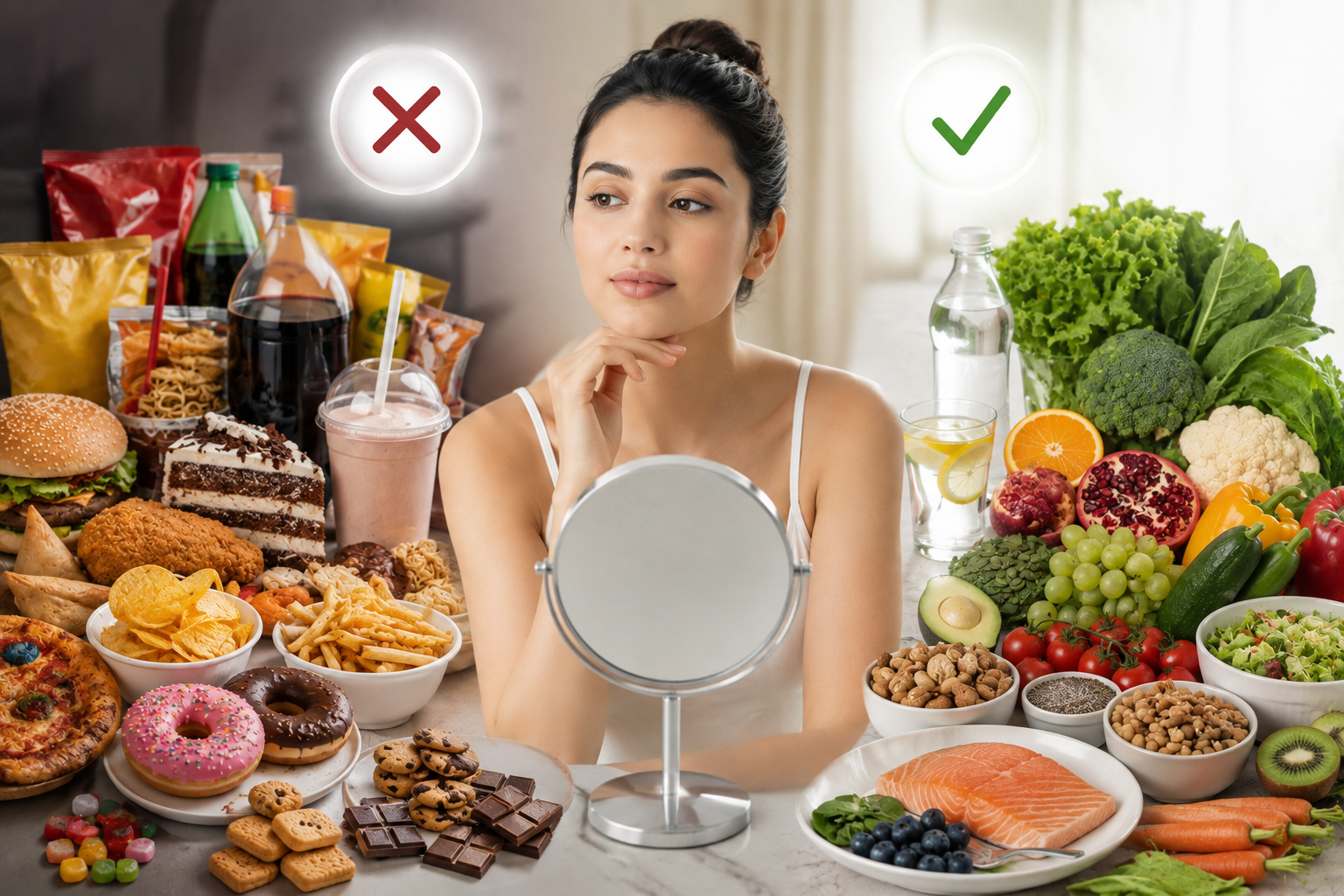
The page specifically lists a number of foods as “Enemies for Your Skin.” Sugar and sugary foods are at the top of the list. It also includes maida and maida-based products such as semolina, vermicelli, bread, biscuits, cookies, wafers, parotta, puffs, pastries, samosa, cutlets and rolls. Cakes, doughnuts and other bakery products are also included. Then there are processed and packed foods, including ready-to-eat sauces and gravies. The list also mentions soda, cool drinks, tetra pack juices, milkshakes, bottled juices, carbonated beverages, bottled milk and other sweetened drinks. Store-bought sweets, fried foods, snacks, pies, candies, chocolates, jams, jellies, cream biscuits and creams also appear on the list. Frozen foods such as French fries, smileys and nuggets, along with vanaspati and reused oil, are included as well.
So, what does your plate say about your skin?
Think about what you usually eat in a day. Are you getting foods that provide protein, hydration, vitamins, minerals and nutrients associated with collagen, elasticity and antioxidant protection? Or does your regular diet contain a lot of sugary foods, bakery products, processed foods, fried snacks and sweetened drinks? You don't have to turn this into a complicated checklist. The bigger idea is simply to become more aware of what your everyday food choices are giving your skin. Because taking care of your skin doesn't begin and end with what you put on it. It also begins with what you put into your body.